
Zero Waste and Circular Economy Solutions
In the “take, make, dispose” linear economy we live in, our consumption of the earth’s finite natural resources (estimated to be over 100 Billion Tonnes per year and increasing) is wholly unsustainable. The world is estimated to be <8% circular which means the vast majority of valuable resources are being lost to us after one use. The situation is compounded by global population growth, greater affluence, business models where products are not designed for longevity and our traditional economic measures of growth (GDP) presents barriers to change in our engrained resource consumption and social practices.
Our current economic model has direct impacts on climate change, loss of natural capital and biodiversity and our supply chains are exposed to uncertainty in material supply and cost going forward.
The good news is that there are steps we can all take to reduce our impact and help make the transition to the Circular Economy where we aim to decouple economic growth from finite resource extraction, through designing out waste, keeping materials in use for as long as possible and ensuring they can circle back into the system effectively at end of life.
Making this transition is about far more than recycling waste and we can contribute to this both individually and through collaborations across the full value chain. Zero waste is a philosophy that aims to mimic nature where nothing is truly wasted and involves changing how materials flow through society or a business. Setting out on a Zero Waste journey will therefore go far beyond traditional end of life waste management.
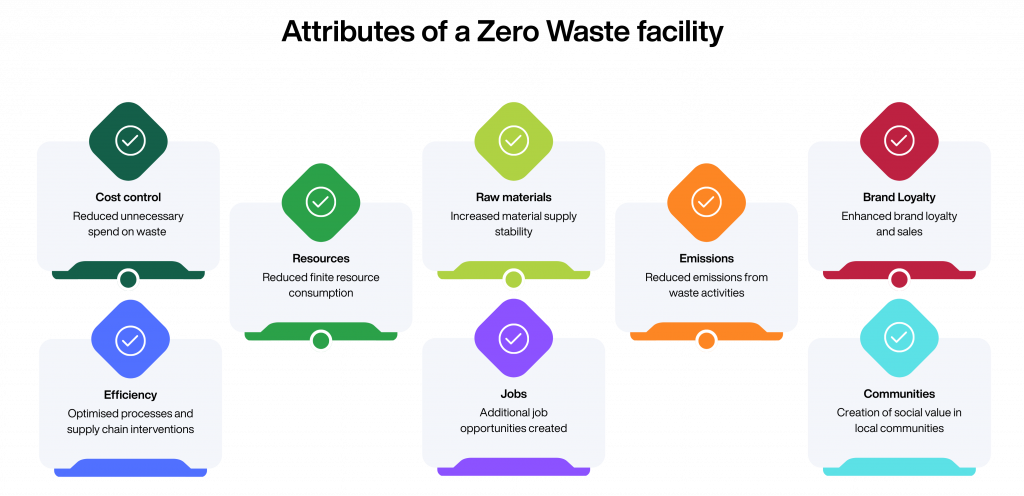
If you would like support on your Zero Waste journey, in policy setting, action planning, or evaluating & evidencing success to work towards a globally recognized Zero Waste Certification, contact our Zero Waste Certified Advisors at info@redintegro.org